
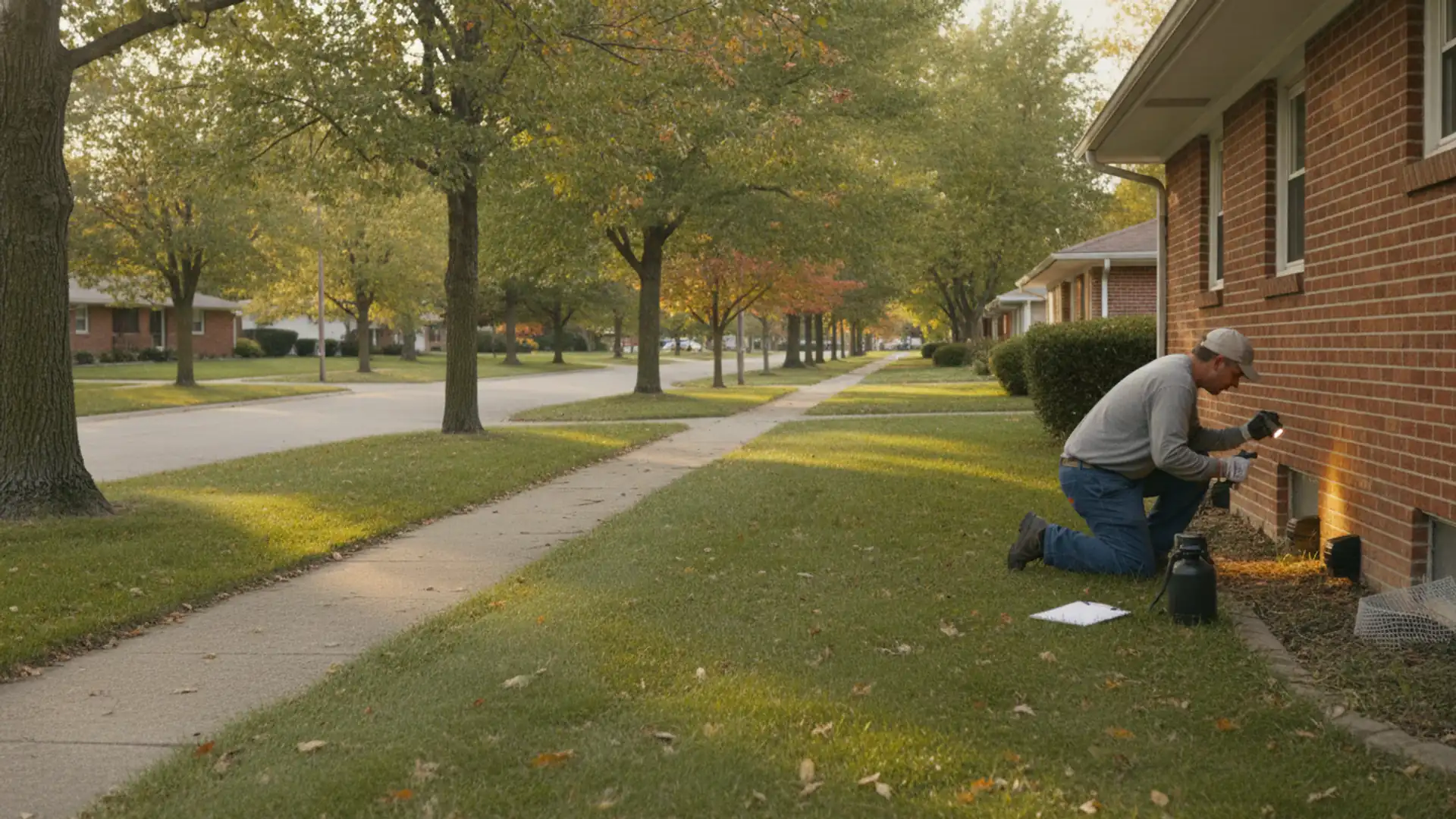
Statewide pest control referrals
Find Pest Control Help Across Illinois
Connect with participating pest control professionals for ants, rodents, termites, bed bugs, cockroaches, spiders, and other common pest problems.
How the referral works
How our contractor-matching service works
Illinois Pest Control is an independent referral service. We don't perform treatments or employ technicians. We connect you with participating independent pest control professionals who do.
You call the number on this site
Have the address or ZIP code ready, plus what you are seeing: the pest, where, how long, and anything you have already tried.
Your call is routed to a participating provider
Your call is connected with a participating independent pest control professional who serves your area, if one is available. We do not send anyone ourselves.
You deal with that provider directly
The provider inspects, recommends a plan, quotes the price, and does any work you agree to under their own business name, IDPH license, and insurance. You decide whether to hire them; there is no obligation.
Good to know: availability and eligible services depend on which participating providers cover your ZIP code. Whoever you hire, ask for their IDPH business license number and check it with the IDPH Pest Control Business Search. Our hiring questions cover the rest.
Common pest problems in Illinois homes
Illinois' cold winters and warm, humid summers set the calendar for most household pests.
Main pest control services
Signs, causes, prevention, typical costs, and what to ask a provider.
Rodent Control
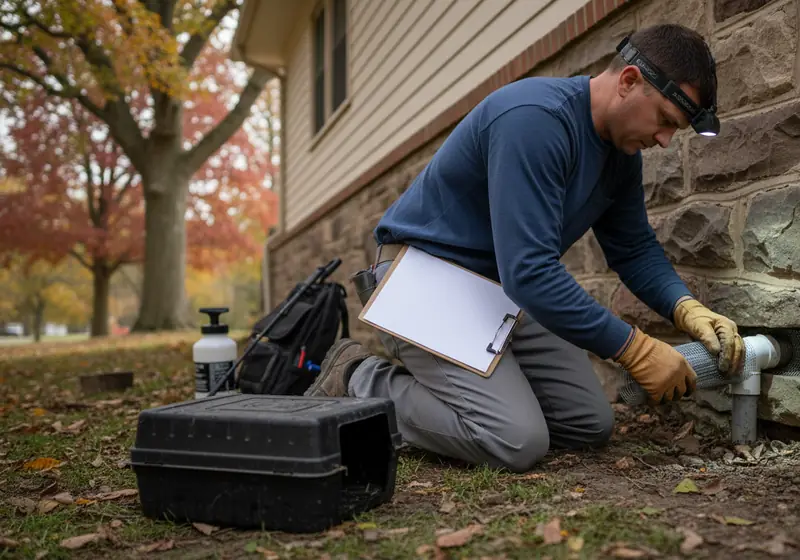
Droppings in a drawer, scratching in the walls at night, or chewed food packages. Here's how mice and rats get into Illinois homes, what professional rodent control involves, and what it costs.
- Mice and rats
- Exclusion: sealing entry points
Termite Control
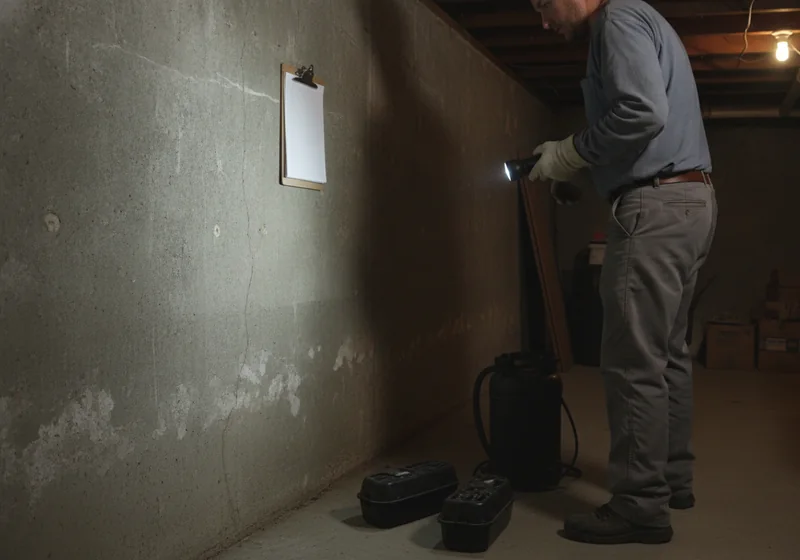
Winged insects swarming from a basement wall, mud tubes on the foundation, or wood that sounds hollow. Yes, Illinois has termites. Here's how to spot them and what inspection and treatment involve.
- Eastern subterranean termites
- Inspection and treatment options
Bed Bug Treatment
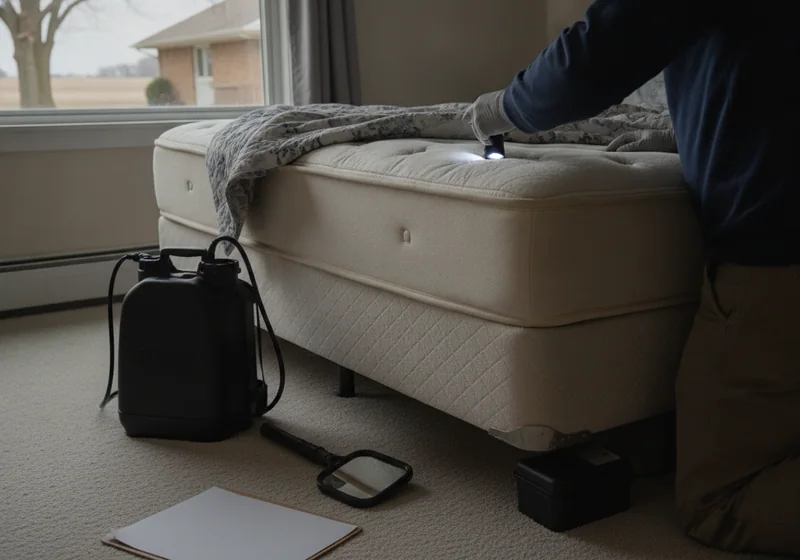
Itchy bites in a line, dark specks on the mattress seam, or a bug you found on the sheets. Here's how to confirm bed bugs, what treatment involves, and what it typically costs.
- Heat and chemical approaches
- Renter and landlord guidance
Straight answers
Signs you may need professional pest control
Prevention is mostly housekeeping and sealing gaps. Persistent, spreading, or structural problems are where a licensed professional earns the call.
| What you are seeing | What you can do now | When to call a professional |
|---|---|---|
| A few ants in the kitchen | Clean up food and crumbs, store food sealed, wipe the trail, fix leaks | They keep coming back, or you see large black ants near wood (possible carpenter ants) |
| Mouse droppings or gnawing | Store food in sealed containers; look for gaps around pipes, doors, and vents | Droppings in several rooms, nests, noise in walls, or it continues after sealing |
| Winged insects swarming indoors in spring | Save a few in a sealed bag or photograph them | Always: swarmers indoors can mean termites. Get an inspection |
| Mud tubes on the foundation | Leave them alone and photograph them | Always: these are a sign of subterranean termites |
| Bites, blood spots, or dark specks on bedding | Wash and dry bedding hot; do not move furniture to other rooms | Always: IDPH says an experienced professional is usually better than doing it yourself |
| Cockroaches seen in daylight | Remove food and water sources; reduce clutter | They keep appearing, or you see them in daytime, which can mean a larger population |
General guidance, not a diagnosis. Prevention approach follows theEPA Citizen's Guide to Pest Control and Pesticide Safety. If you use any pesticide yourself, follow the label exactly.
~750
IDPH-licensed business locations
6
Cities covered in detail
$100K
Minimum injury coverage required
$0
Referral fee for callers
Illinois service-area directory
City pages cover local housing, weather, health departments, and typical costs. You can call from anywhere in Illinois; availability depends on your ZIP code.
Residential pest prevention that actually helps
The EPA's integrated pest management approach starts with taking away what pests need: food, water, shelter, and a way in.
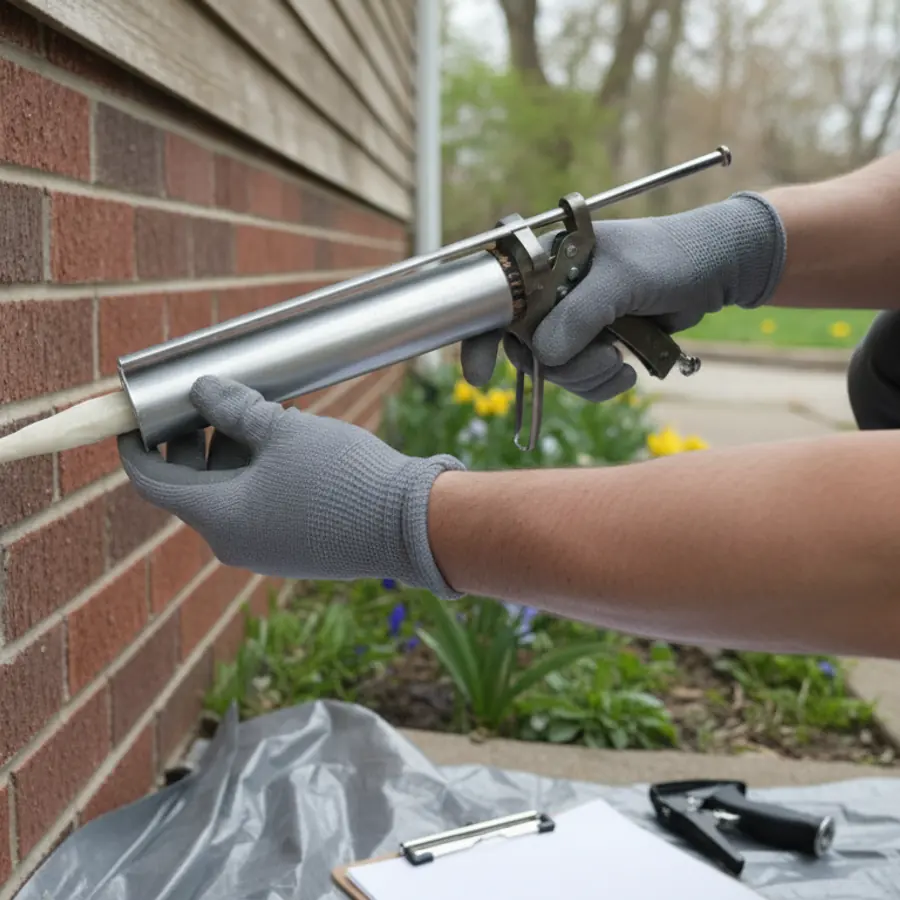
Seal the way in
Close gaps around pipes, vents, and doors. IDPH says mice fit through a crack a pencil fits into.
Take away water
Fix leaks, clear gutters, and keep crawl spaces dry; termites, carpenter ants, and roaches need moisture.
Store food sealed
Pantry items, pet food, and birdseed in hard containers; trash out daily.
Clear the foundation
U of I Extension recommends a 12- to 18-inch bare soil strip around the foundation to discourage termites.
What to expect
What to expect from a pest control service
Every home and every pest problem is different. These are the stages most professional pest control follows.
Inspection
A pest control professional looks for the pest, the evidence (droppings, damage, trails, live insects), how it is getting in, and what is attracting it: food, water, clutter, or gaps in the building.
A treatment plan and a price
Ask for the plan, the products or methods involved, any preparation you need to do, and the price before work begins. Illinois requires the business to be licensed by the Illinois Department of Public Health (IDPH) and to employ a certified technician.
Treatment and exclusion
Depending on the pest, this can mean baits, traps, targeted applications, or sealing entry points (exclusion). The EPA recommends integrated pest management (IPM), which combines methods and puts prevention first.
Follow-up and monitoring
Many problems need more than one visit. Ask what follow-up is included, how results are checked, and what to do between visits.
Prevention
The provider should explain what will keep the problem from coming back: sealing gaps, fixing moisture, storing food, and reducing clutter. No treatment can guarantee pests never return.
Connect With a Pest Control Professional
Call and we will try to connect you with a participating independent pest control provider who serves your area.
Frequently asked questions
Is Illinois Pest Control a pest control company?
No. Illinois Pest Control is an independent contractor-referral service. When you call, you are connected with a participating independent pest control professional who serves your area, if one is available. That provider inspects, quotes, and performs any treatment under their own business name, license, and insurance.
How much does pest control cost in Illinois?
HomeAdvisor's June 2026 data puts the national average at $172 per service, with most between $108 and $261. One-time treatments commonly run $300 to $550, rodent work $189 to $655, termite treatment $263 to $1,033, and bed bugs $1,000 to $4,000 for a typical whole-home job.
Do pest control companies need a license in Illinois?
Yes. Every commercial structural pest control business location must be licensed by the Illinois Department of Public Health, employ at least one certified technician, and carry liability insurance of at least $100,000 per person or $300,000 per occurrence, plus $50,000 for property damage.
Are there termites in Illinois?
Yes. University of Illinois Extension identifies the eastern subterranean termite as the common destructive termite in Illinois. Swarmers indoors and mud tubes on the foundation are the main warning signs.
Can I get same-day pest control?
We can't promise availability or response times. Whether a participating provider can help, and when, depends on your location and the service you need. Call and ask.
Is professional pest control safe for pets and children?
Licensed providers must follow product labels, which include safety precautions. Ask what will be applied, where, and how long children and pets should stay out of treated areas. No pesticide treatment is completely risk-free.
Request pest control assistance
- 1Call the number belowHave the address or ZIP code ready.
- 2Describe what you are seeingThe pest, where, how long, and what you have tried.
- 3Get connectedWe route your call to a participating independent provider who serves your area, if one is available. They inspect and quote; you decide.
Availability and eligible services vary by ZIP code. How referrals work
Serving Illinois property owners
Springfield · Rockford · Peoria · Bloomington · Joliet · Champaign
Free
Referral
No
Obligation
Find an Exterminator Near You
Call and we will try to connect you with a participating independent pest control provider who serves your area.