Skip to content

(217) 626-5123Free pest control referral line, independent service. How it works

Illinois Pest Control

Bed Bug Treatment in Illinois

Itchy bites in a line, dark specks on the mattress seam, or a bug you found on the sheets. Here's how to confirm bed bugs, what treatment involves, and what it typically costs.

Free referral anywhere in Illinois — Call (217) 626-5123

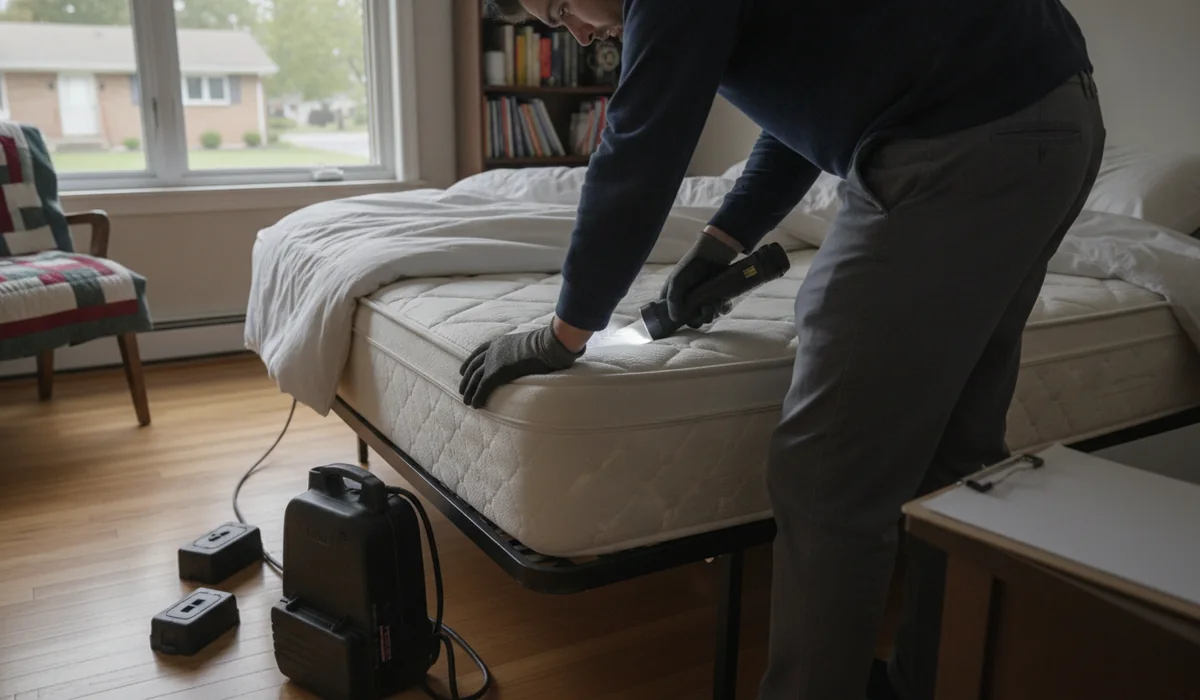
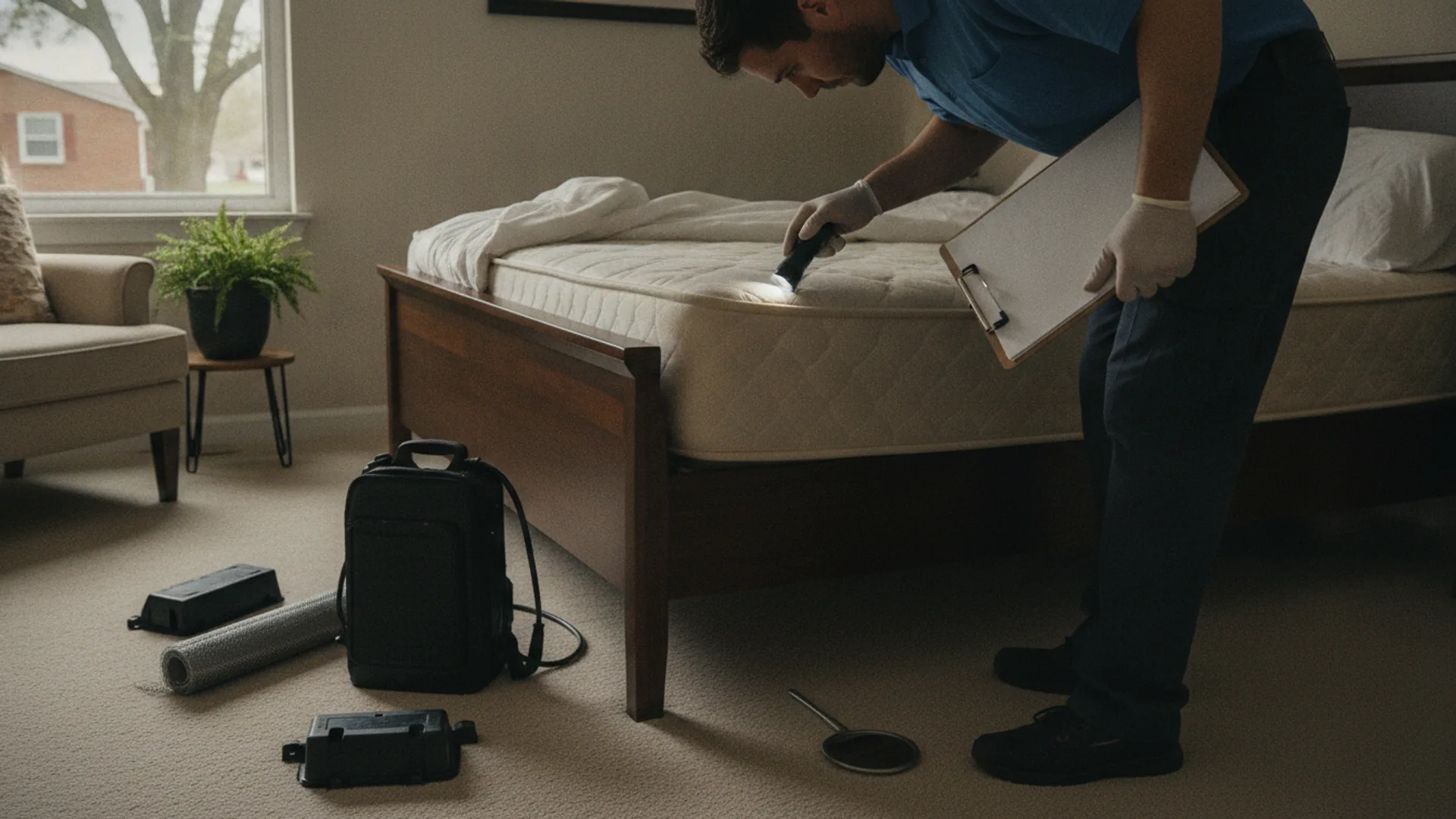
Pest control professional inspecting the seams of a mattress with a flashlight in an Illinois bedroom

Free referral · No obligation

Get Help With Bed Bugs

Call to be connected with a participating independent pest control professional who serves your area. No obligation to hire.

Last updated: 2026-10-11

Illinois Pest Control is an independent referral service that connects Illinois homeowners, renters, and property managers with participating providers for bed bug treatment. Bed bug service can vary by provider and location, so confirm it when you're connected.

Signs of bed bugs

The Illinois Department of Public Health lists these signs:

  • Blood smears and dark fecal specks on sheets, mattress seams, and box springs.
  • Amber-colored shed skins.
  • A musty, sweet odor in heavy infestations.
  • Bites alone aren't proof; many things cause bites, and people react differently.

How bed bugs spread

IDPH says bed bugs hitchhike in luggage and on public transportation, and in secondhand furniture, mattresses, bedding, and clothing. In apartment buildings, infestations spread between units without proper treatment. That's why moving infested furniture to another room, or sleeping on the couch, often spreads the problem.

IDPH also notes that while pathogens have been found in bed bugs, they apparently don't transmit diseases to people. The harm is bites, stress, and lost sleep.

What you can do now

IDPH's practical steps:

  • Wash bedding and clothing and dry it on high heat; IDPH says 20 or more minutes in a hot dryer kills all life stages.
  • Encase the mattress and box spring; IDPH says encasements are often better than treating or throwing them away.
  • Pull the bed away from the wall and keep bedding off the floor.
  • Don't move furniture or belongings to other rooms or homes.

What professional bed bug treatment involves

IDPH says that for most infestations, hiring an experienced pest management professional is preferable to doing it yourself. Treatment usually starts with an inspection to confirm bed bugs and find every affected area, then heat treatment, targeted insecticide applications, or a combination, with preparation steps for you and one or more follow-up visits. Ask the provider for their prep list and follow-up schedule in writing.

Renters and landlords

IDPH's FAQ says its Structural Pest Control Program has no authority to hold a landlord accountable for bed bugs. If you rent and your landlord won't address them, IDPH says to contact your local health department, city hall, or building code office. Report bed bugs to your landlord in writing, and check your lease and local ordinances.

When to call about bed bugs

  • You've found a live bug, shed skins, or specks on bedding or mattress seams.
  • Bites keep appearing after you've washed and dried bedding hot.
  • You live in an apartment and a neighbor has bed bugs.
  • You brought home secondhand furniture and are seeing signs.
  • You manage a rental, hotel, or dorm property.

What bed bug treatment costs

HomeAdvisor's June 2026 data puts bed bug treatment at an average of $2,500, with most between $1,000 and $4,000 and severe whole-home cases up to $6,200. By room: about $300 to $650 for one room, $700 to $1,000 for two, and $1,050 to $1,450 for three. Heat treatment runs $1 to $3 per square foot and chemical treatment $2 to $5 per square foot.

  • How many rooms are affected.
  • Heat vs. chemical treatment.
  • Follow-up visits included.
  • Building type: apartments may need adjacent units inspected.
  • Encasements and preparation help.
Mattress and box spring sealed in zippered encasements in a tidy bedroom

What to do right now

  1. Collect a suspected bug on clear tape or in a sealed bag.
  2. Wash and dry bedding on high heat.
  3. Don't move to another bed or room.
  4. If you rent, tell your landlord in writing.
  5. Call and ask about inspection, preparation, and follow-up.

Questions to ask before you hire

  • Is your business licensed by the Illinois Department of Public Health, and what is the license number? Who is the certified technician?
  • How will you confirm bed bugs before treating?
  • Heat, chemical, or both, and why for my home?
  • What preparation do I need to do, and do you have a written prep list?
  • How many follow-up visits are included, and is there a guarantee period?

Related pest control guides

Straight answers

What you can do vs. when to call a professional

Prevention is mostly housekeeping and sealing gaps. Persistent, spreading, or structural problems are where a licensed professional earns the call.

What you are seeingWhat you can do nowWhen to call a professional
A few ants in the kitchenClean up food and crumbs, store food sealed, wipe the trail, fix leaksThey keep coming back, or you see large black ants near wood (possible carpenter ants)
Mouse droppings or gnawingStore food in sealed containers; look for gaps around pipes, doors, and ventsDroppings in several rooms, nests, noise in walls, or it continues after sealing
Winged insects swarming indoors in springSave a few in a sealed bag or photograph themAlways: swarmers indoors can mean termites. Get an inspection
Mud tubes on the foundationLeave them alone and photograph themAlways: these are a sign of subterranean termites
Bites, blood spots, or dark specks on beddingWash and dry bedding hot; do not move furniture to other roomsAlways: IDPH says an experienced professional is usually better than doing it yourself
Cockroaches seen in daylightRemove food and water sources; reduce clutterThey keep appearing, or you see them in daytime, which can mean a larger population

General guidance, not a diagnosis. Prevention approach follows theEPA Citizen's Guide to Pest Control and Pesticide Safety. If you use any pesticide yourself, follow the label exactly.

What to expect

What professional bed bug treatment usually involves

Every home and every pest problem is different. These are the stages most professional pest control follows.

  1. Inspection

    A pest control professional looks for the pest, the evidence (droppings, damage, trails, live insects), how it is getting in, and what is attracting it: food, water, clutter, or gaps in the building.

  2. A treatment plan and a price

    Ask for the plan, the products or methods involved, any preparation you need to do, and the price before work begins. Illinois requires the business to be licensed by the Illinois Department of Public Health (IDPH) and to employ a certified technician.

  3. Treatment and exclusion

    Depending on the pest, this can mean baits, traps, targeted applications, or sealing entry points (exclusion). The EPA recommends integrated pest management (IPM), which combines methods and puts prevention first.

  4. Follow-up and monitoring

    Many problems need more than one visit. Ask what follow-up is included, how results are checked, and what to do between visits.

  5. Prevention

    The provider should explain what will keep the problem from coming back: sealing gaps, fixing moisture, storing food, and reducing clutter. No treatment can guarantee pests never return.

How the referral works

How our contractor-matching service works

  1. You call the number on this site

    Have the address or ZIP code ready, plus what you are seeing: the pest, where, how long, and anything you have already tried.

  2. Your call is routed to a participating provider

    Your call is connected with a participating independent pest control professional who serves your area, if one is available. We do not send anyone ourselves.

  3. You deal with that provider directly

    The provider inspects, recommends a plan, quotes the price, and does any work you agree to under their own business name, IDPH license, and insurance. You decide whether to hire them; there is no obligation.

Good to know: availability and eligible services depend on which participating providers cover your ZIP code. Whoever you hire, ask for their IDPH business license number and check it with the IDPH Pest Control Business Search. Our hiring questions cover the rest.

Get Help With Bed Bugs

Call and we will try to connect you with a participating independent pest control provider who serves your area.

Questions

Bed Bug Treatment questions

How much does bed bug treatment cost in Illinois?

HomeAdvisor's June 2026 national data puts bed bug treatment at $1,000 to $4,000, averaging $2,500, with one room about $300 to $650. Heat treatment runs $1 to $3 per square foot and chemical treatment $2 to $5 per square foot.

Do bed bugs spread disease?

The Illinois Department of Public Health says that while pathogens have been found in bed bugs, they apparently don't transmit diseases to humans. Bites, itching, and lost sleep are the main harms.

Are landlords responsible for bed bugs in Illinois?

IDPH says its pest control program can't hold landlords accountable and directs tenants to their local health department, city hall, or building code office. Responsibility depends on local ordinances and your lease; report the problem to your landlord in writing.

Can I get rid of bed bugs myself?

IDPH says hiring an experienced pest management professional is preferable for most infestations. Washing and drying bedding hot and using encasements help, but they rarely solve an established infestation alone.

Does heat kill bed bugs?

Yes. IDPH says drying clothes and bedding on high heat for 20 minutes or more kills all life stages. Professional heat treatment applies the same principle to whole rooms.

Call (217) 626-5123 · Pest Control Help