
Last updated: 2026-10-11
Illinois Pest Control is an independent referral service that connects Illinois property owners with participating providers for rodent control, including mouse extermination and rat control. In most Illinois homes the problem is the house mouse, which the Illinois Department of Public Health calls the most common rodent in developed areas.
Signs of mice and rats
According to IDPH, droppings, fresh gnawing, and tracks show where mice are active, and nests made of finely shredded paper or other fibers turn up in sheltered spots. Other common signs:
- Scratching or scurrying in walls or ceilings, often at night.
- Chewed food packaging in pantries and cabinets.
- Grease marks along walls and baseboards where rodents travel.
- A musky odor in enclosed spaces.
- Pets suddenly interested in one spot by a wall or appliance.
How rodents get in
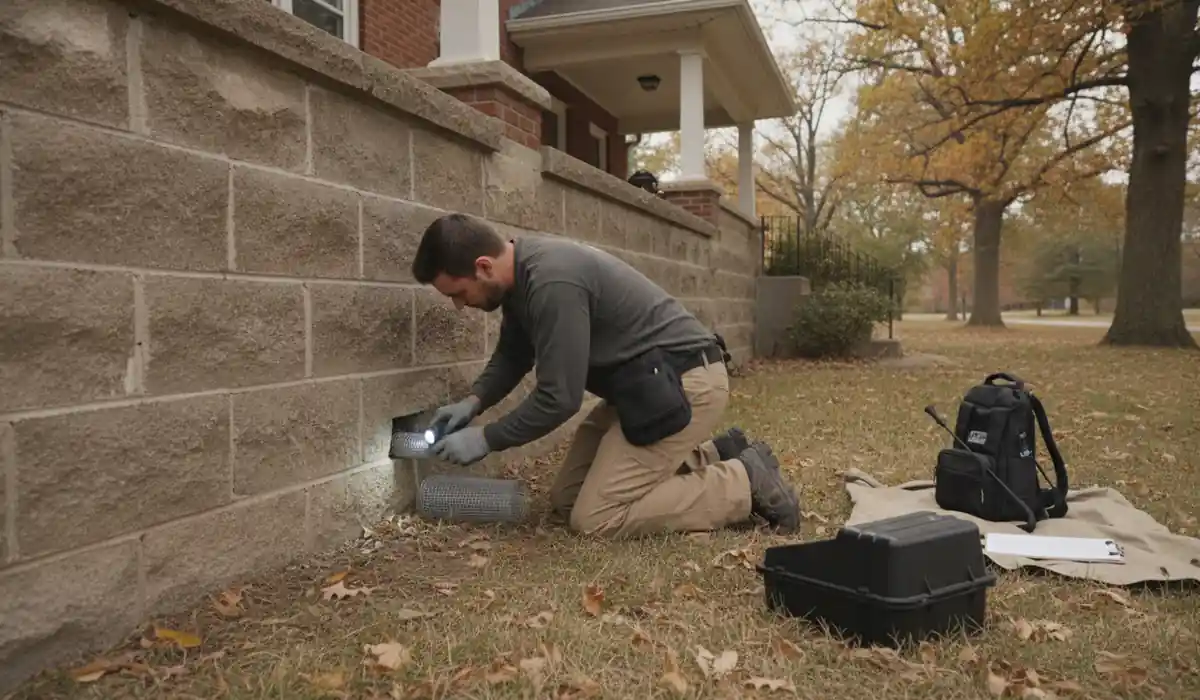
IDPH says a mouse can slip through a crack a pencil fits into, just over 1/4 inch. Gaps around pipes, gas and electric lines, dryer vents, garage doors, and foundation cracks are common entry points. Rats need bigger openings but can widen gaps by gnawing.
Once inside, mice multiply quickly: IDPH notes a female can have five to 10 litters a year of usually five or six young each. That's why a few droppings shouldn't be ignored, and why Illinois' cold months, when rodents look for warm shelter, are a common time for problems to start.
Exclusion: the part that keeps them out
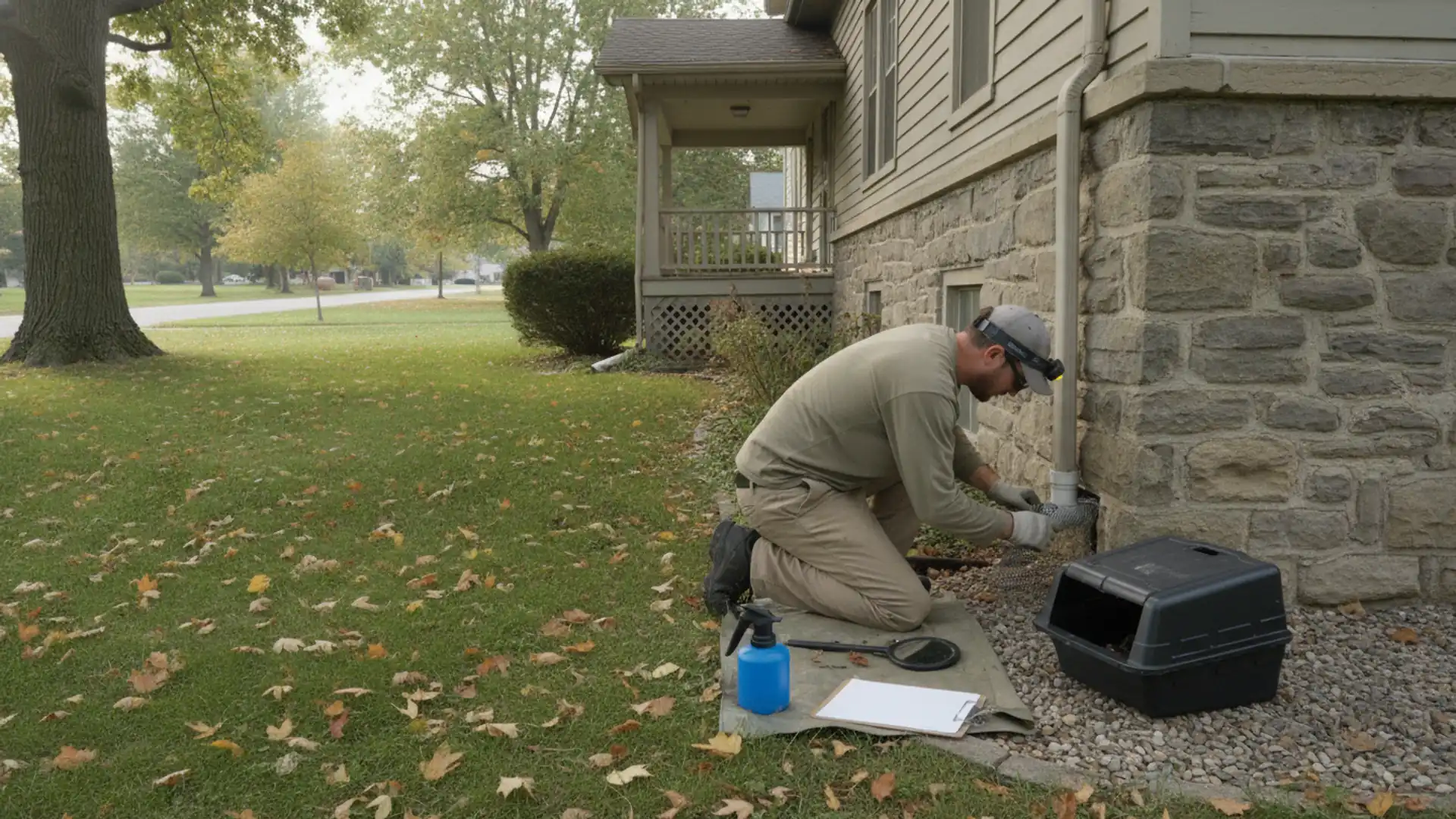
IDPH's guidance on mice rests on three things: sanitation to remove food and shelter, "mouse-proof construction" to seal openings, and population reduction with traps or baits when an infestation exists. Trapping alone doesn't stop new mice from coming in. Professional exclusion means finding and sealing entry points with durable materials like metal mesh, sheet metal, or concrete, not foam alone, which rodents can chew through.
Ask any provider whether exclusion is included in the price or quoted separately. HomeAdvisor puts rodent exclusion at $200 to $600 on its own.
Safety
Don't handle dead rodents, nests, or droppings with bare hands, and don't sweep or vacuum droppings dry, which can stir up dust. If you use traps or baits yourself, keep them away from children and pets and follow the label exactly. Rodenticide baits should be in tamper-resistant stations. For anything larger than mice and rats, such as raccoons or other wildlife, don't try to handle the animal yourself.
When to call about mice or rats
- You find droppings in more than one room or on more than one floor.
- You hear activity in walls or ceilings.
- You've trapped mice but keep catching more.
- You see rats, or burrows along the foundation.
- You manage a rental, restaurant, or business with rodent activity.
What rodent control costs
HomeAdvisor's June 2026 data puts professional rat extermination at an average of $395, with most jobs between $189 and $655, and lists mice or rats at $180 to $600 in its general pest guide. Exclusion, sealing the entry points, runs $200 to $600. These are national figures; the size of the home and the number of entry points drive the price.
- Mice vs. rats: rat work can involve larger openings and outdoor burrows.
- Number of entry points to seal.
- Follow-up visits to check traps or bait stations.
- Cleanup and sanitation of contaminated areas, often extra.
- Ongoing monitoring plans for businesses and rentals.
What you can do right now
- Move food, birdseed, and pet food into sealed containers.
- Note where you find droppings or damage.
- Look for gaps around pipes, vents, and doors, especially low on exterior walls.
- Don't sweep up droppings dry; ask a professional about safe cleanup.
- Call and ask whether the quote includes exclusion.
Questions to ask before you hire
- Is your business licensed by the Illinois Department of Public Health, and what is the license number? Who is the certified technician?
- Will you find and seal the entry points, and is that included?
- Will you use traps, bait stations, or both, and where will they be placed?
- How many follow-up visits are included?
- What precautions should we take with children and pets?