
Skip to content

(217) 626-5123Free pest control referral line, independent service. How it works

Illinois Pest Control

Ant Control in Illinois

A trail across the kitchen counter, ants coming up through a slab crack, or large black ants near a damp window frame. Here's how to tell common ants apart and when a professional makes sense.

Free referral anywhere in Illinois — Call (217) 626-5123

Line of small ants on a kitchen countertop near a sink in an Illinois home

Free referral · No obligation

Get Help With Ants

Call to be connected with a participating independent pest control professional who serves your area. No obligation to hire.

Last updated: 2026-10-11

Illinois Pest Control is an independent referral service that connects Illinois property owners with participating providers for ant control. Most ant problems are a nuisance; carpenter ants are the exception, because their nests can damage wood. Knowing which ant you have changes what helps.

Common ants in Illinois homes

University of Illinois Extension lists pavement ants, odorous house ants, carpenter ants, and pharaoh ants among the most common ants in the state. A few identifying points from Extension:

  • Odorous house ants: about 1/8 inch, brownish-black, and smell like rotten coconut when crushed. They nest under rocks and debris and sometimes in walls and floors, and they eat sweets, meats, and dairy.
  • Pavement ants: dark brown-black, about 1/6 inch, often coming up through cracks in slabs and driveways.
  • Carpenter ants: usually black and much larger, 1/4 to 3/4 inch. According to Extension, they don't eat wood, but they hollow it out for nests, and they're drawn to moisture: bathrooms, basements, sump areas, leaking pipes, and crawl spaces.

Why ant trails keep coming back

The ants you see are foragers from a colony you usually can't. Wiping a trail away or spraying the ants in view rarely reaches the colony, and some sprays scatter it. Ants return when the food, water, or shelter that drew them is still there, which is why sanitation and sealing are the first steps.

Carpenter ants inside in late winter or early spring, or piles of fine wood shavings (frass), can mean a nest indoors. That's worth an inspection, because the nest is often tied to a moisture problem in the structure.

Prevention that actually helps

These steps make your home less attractive to ants:

  • Store sweets, pet food, and pantry items in sealed containers; clean up crumbs and spills promptly.
  • Fix leaks and reduce moisture, especially around sinks, windows, and basements.
  • Trim branches and shrubs touching the house; they're ant highways.
  • Seal cracks around doors, windows, and utility entries.
  • Keep firewood and mulch away from the foundation.

What professional ant control usually involves

A provider will identify the species, find where the ants are entering and nesting, and choose an approach to match: baits that foragers carry back to the colony, targeted treatments at entry points, or locating and treating a carpenter ant nest. For carpenter ants, fixing the moisture source matters as much as the treatment.

When to call about ants

  • Ants keep returning after you've cleaned and sealed obvious entry points.
  • You see large black ants indoors, especially in late winter or spring.
  • You find fine sawdust-like shavings near wood trim, windows, or in the basement.
  • Ants are in several rooms or inside walls.
  • You manage a rental, restaurant, or business with ongoing ant activity.

What ant control costs

HomeAdvisor's June 2026 data lists ant control at $100 to $500, with the overall average pest control service at $172. Carpenter ant work that involves finding and treating a nest inside the structure tends to cost more than treating nuisance ants.

  • Species: carpenter ants usually cost more than pavement or odorous house ants.
  • Nest location: nests inside walls take more work to reach.
  • Follow-up: baits work over days to weeks and may need a return visit.
  • Moisture repairs: fixing leaks or rotted wood is separate.
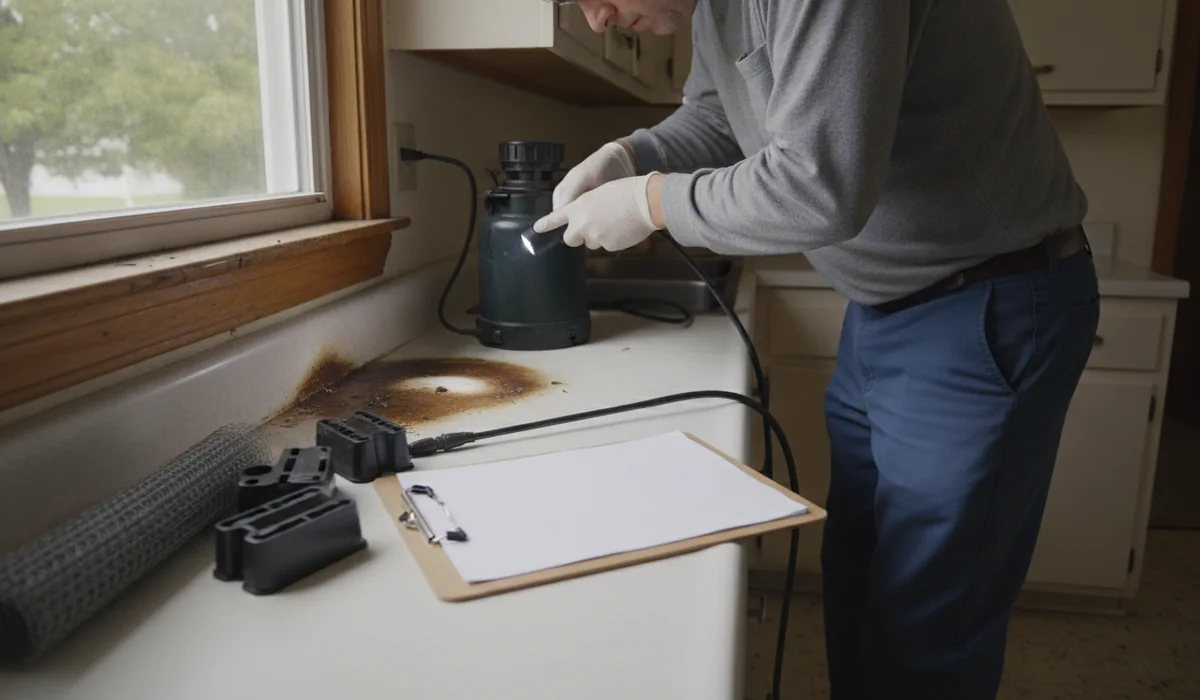
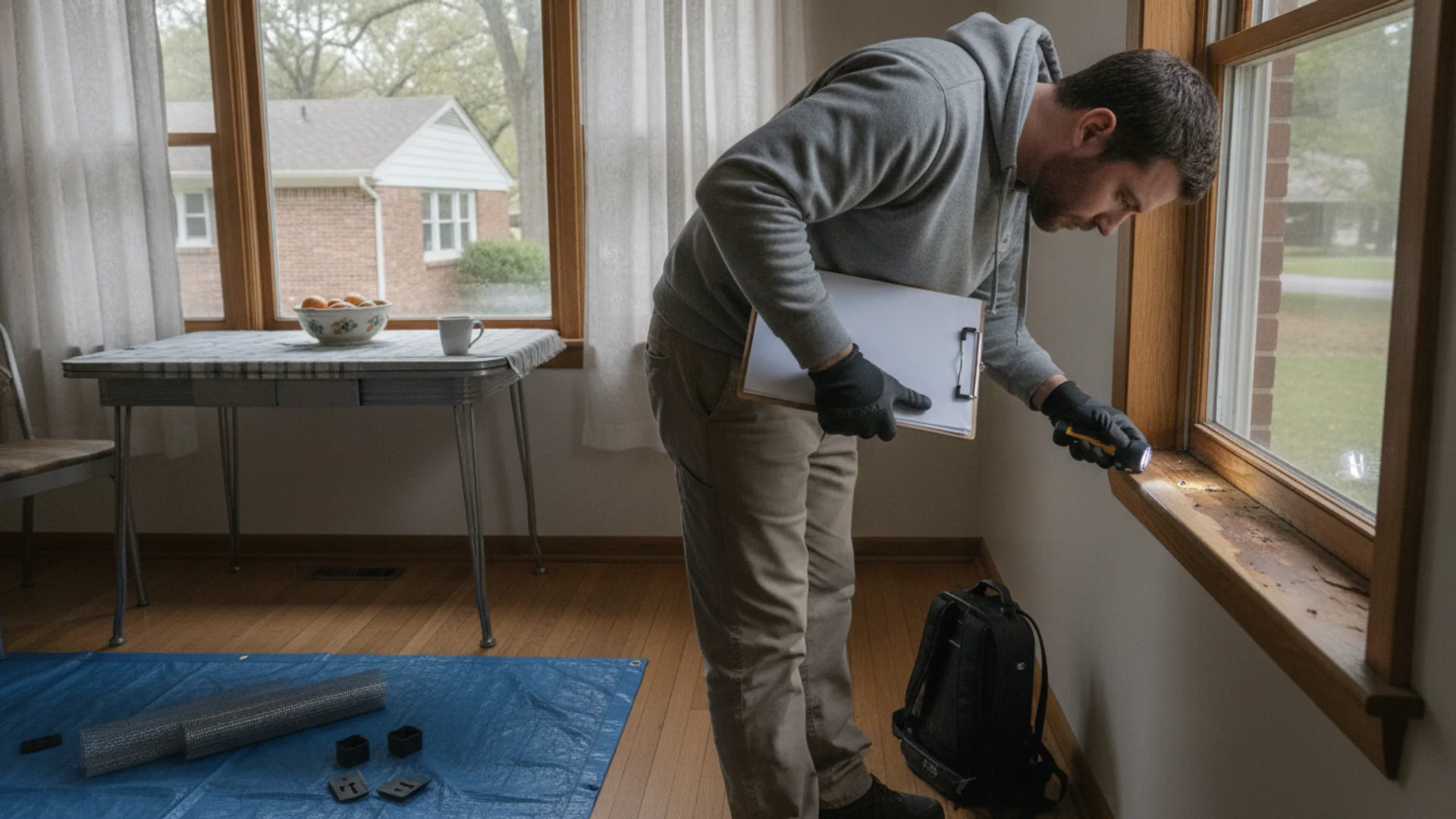
Pest control technician inspecting a damp window sill for carpenter ant activity

What you can do right now

  1. Note where the ants appear and the size and color of the ants.
  2. Clean the trail and any food source with soap and water.
  3. Seal food and pet food in containers.
  4. Check for leaks or damp wood near where you see them.
  5. If you see large black ants or wood shavings, call for an inspection.

Questions to ask before you hire

  • Is your business licensed by the Illinois Department of Public Health, and what is the license number? Who is the certified technician?
  • What species do you think this is, and how does that change the treatment?
  • Will you use baits, sprays, or both, and where?
  • If these are carpenter ants, will you look for the nest and the moisture source?
  • Is a follow-up visit included?

Related pest control guides

Straight answers

What you can do vs. when to call a professional

Prevention is mostly housekeeping and sealing gaps. Persistent, spreading, or structural problems are where a licensed professional earns the call.

What you are seeingWhat you can do nowWhen to call a professional
A few ants in the kitchenClean up food and crumbs, store food sealed, wipe the trail, fix leaksThey keep coming back, or you see large black ants near wood (possible carpenter ants)
Mouse droppings or gnawingStore food in sealed containers; look for gaps around pipes, doors, and ventsDroppings in several rooms, nests, noise in walls, or it continues after sealing
Winged insects swarming indoors in springSave a few in a sealed bag or photograph themAlways: swarmers indoors can mean termites. Get an inspection
Mud tubes on the foundationLeave them alone and photograph themAlways: these are a sign of subterranean termites
Bites, blood spots, or dark specks on beddingWash and dry bedding hot; do not move furniture to other roomsAlways: IDPH says an experienced professional is usually better than doing it yourself
Cockroaches seen in daylightRemove food and water sources; reduce clutterThey keep appearing, or you see them in daytime, which can mean a larger population

General guidance, not a diagnosis. Prevention approach follows theEPA Citizen's Guide to Pest Control and Pesticide Safety. If you use any pesticide yourself, follow the label exactly.

What to expect

What professional ant control usually involves

Every home and every pest problem is different. These are the stages most professional pest control follows.

  1. Inspection

    A pest control professional looks for the pest, the evidence (droppings, damage, trails, live insects), how it is getting in, and what is attracting it: food, water, clutter, or gaps in the building.

  2. A treatment plan and a price

    Ask for the plan, the products or methods involved, any preparation you need to do, and the price before work begins. Illinois requires the business to be licensed by the Illinois Department of Public Health (IDPH) and to employ a certified technician.

  3. Treatment and exclusion

    Depending on the pest, this can mean baits, traps, targeted applications, or sealing entry points (exclusion). The EPA recommends integrated pest management (IPM), which combines methods and puts prevention first.

  4. Follow-up and monitoring

    Many problems need more than one visit. Ask what follow-up is included, how results are checked, and what to do between visits.

  5. Prevention

    The provider should explain what will keep the problem from coming back: sealing gaps, fixing moisture, storing food, and reducing clutter. No treatment can guarantee pests never return.

How the referral works

How our contractor-matching service works

  1. You call the number on this site

    Have the address or ZIP code ready, plus what you are seeing: the pest, where, how long, and anything you have already tried.

  2. Your call is routed to a participating provider

    Your call is connected with a participating independent pest control professional who serves your area, if one is available. We do not send anyone ourselves.

  3. You deal with that provider directly

    The provider inspects, recommends a plan, quotes the price, and does any work you agree to under their own business name, IDPH license, and insurance. You decide whether to hire them; there is no obligation.

Good to know: availability and eligible services depend on which participating providers cover your ZIP code. Whoever you hire, ask for their IDPH business license number and check it with the IDPH Pest Control Business Search. Our hiring questions cover the rest.

Get Help With Ants

Call and we will try to connect you with a participating independent pest control provider who serves your area.

Questions

Ant Control questions

How much does an ant exterminator cost in Illinois?

HomeAdvisor's June 2026 national data lists ant control at $100 to $500. Carpenter ant work that requires finding a nest in the structure usually costs more than treating nuisance ants.

Are carpenter ants as bad as termites?

They're different. University of Illinois Extension notes carpenter ants don't eat wood the way termites do, but they hollow it out for nests and are drawn to moist wood, so they can damage structures and point to a moisture problem.

Why do ants come back after I spray them?

The ants you see are foragers from a hidden colony. Spraying them rarely reaches the colony and can scatter it. Removing food and water sources, sealing entry points, and baits that reach the colony work better.

What ant smells like coconut?

The odorous house ant. University of Illinois Extension describes it as a small brownish-black ant that smells like rotten coconut when crushed.

Call (217) 626-5123 · Pest Control Help