
Skip to content

(217) 626-5123Free pest control referral line, independent service. How it works

Illinois Pest Control

Termite Control in Illinois

Winged insects swarming from a basement wall, mud tubes on the foundation, or wood that sounds hollow. Yes, Illinois has termites. Here's how to spot them and what inspection and treatment involve.

Free referral anywhere in Illinois — Call (217) 626-5123

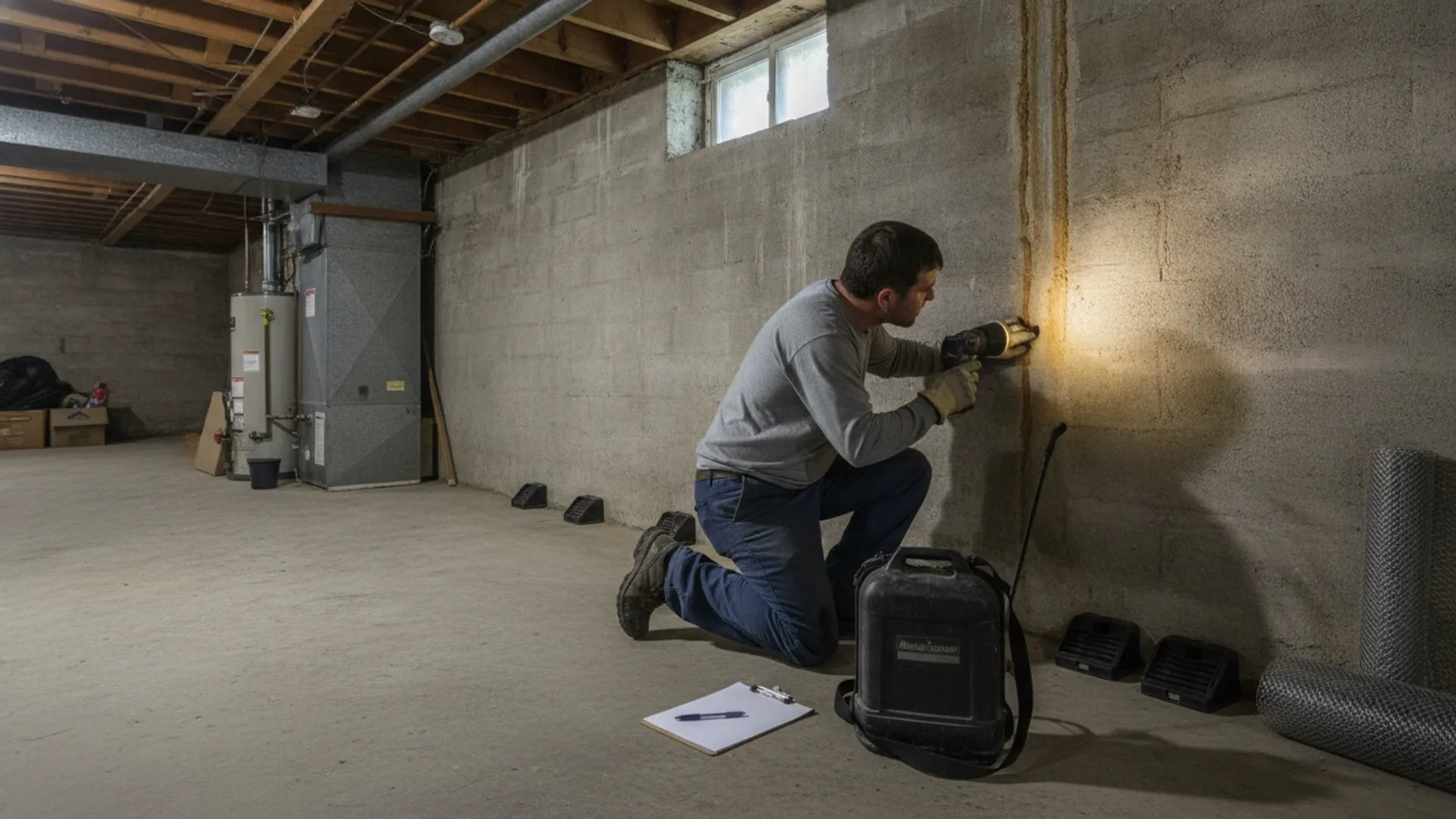
Pest control professional inspecting a basement foundation wall for termite mud tubes in an Illinois home

Free referral · No obligation

Get a Termite Inspection

Call to be connected with a participating independent pest control professional who serves your area. No obligation to hire.

Last updated: 2026-10-11

Illinois Pest Control is an independent referral service that connects Illinois homeowners with participating providers for termite control. Termite eligibility can vary by provider and location, so confirm termite service when you're connected.

Are there termites in Illinois?

Yes. According to University of Illinois Extension, the eastern subterranean termite (Reticulitermes flavipes) is the common destructive termite in Illinois. It builds its colony underground, needs high humidity, and avoids open air, which is why it travels through soil and the mud tubes it builds. Colonies can reach wood in a house through foundation cracks and wood that touches soil.

Signs of termites

Common warning signs:

  • Swarmers: winged termites, often near windows and doors. Extension notes swarms are common in spring but can happen in most warm months in Illinois. Discarded wings on sills are another clue.
  • Mud tubes: pencil-width tunnels of soil running up foundation walls, piers, or slab edges.
  • Damaged wood: wood that sounds hollow, blisters, or crumbles, with soil packed in the galleries.
  • Sticking doors or windows, sometimes from moisture associated with termite activity.

Termites or flying ants?

Both swarm in spring. Termite swarmers have straight antennae, a thick waist, and two pairs of wings of equal length; ant swarmers have elbowed antennae, a pinched waist, and front wings longer than the back. If you're not sure, save a few in a sealed bag for the inspector.

Prevention

University of Illinois Extension recommends a few practical steps:

  • Seal and caulk cracks in the foundation.
  • Keep a 12- to 18-inch strip of bare soil around the foundation, with mulch and plants pulled back.
  • Leave some of the concrete foundation wall exposed so tubes are visible, and scout it for mud tubes.
  • Keep gutters and grading carrying water away from the house; termites need moisture.
  • Don't store firewood or lumber against the house.

What termite treatment usually involves

A professional inspection looks for activity, damage, and conditions that invite termites. Common treatment approaches for subterranean termites are liquid termiticide applied to the soil around and under the structure, and baiting systems installed around the house. Ask which approach is proposed and why, what warranty or renewal is offered, and how the provider will document the inspection.

When to call about termites

  • Winged insects swarm indoors, especially from a basement or near windows.
  • You find mud tubes on the foundation, piers, or slab.
  • Wood sounds hollow or crumbles.
  • You're buying or selling a home and need a wood-destroying insect inspection.
  • Your previous termite treatment warranty has lapsed.

What termite control costs

HomeAdvisor's June 2026 data puts termite treatment at an average of $621, with most homeowners paying $263 to $1,033; small jobs can be as low as $75 and large infestations up to $1,750. For subterranean termites specifically, it lists $225 to $900. Per linear foot, it lists $3 to $16 for chemical termiticide and $8 to $12 for bait systems. Many providers include the inspection with a treatment quote.

  • Size and perimeter of the foundation.
  • Treatment type: liquid soil treatment vs. bait stations.
  • Construction: slabs, crawl spaces, and basements differ.
  • Warranty and renewals: annual renewal fees are common.
  • Repairs: damaged wood is a separate cost ($600 to $3,000 per HomeAdvisor).
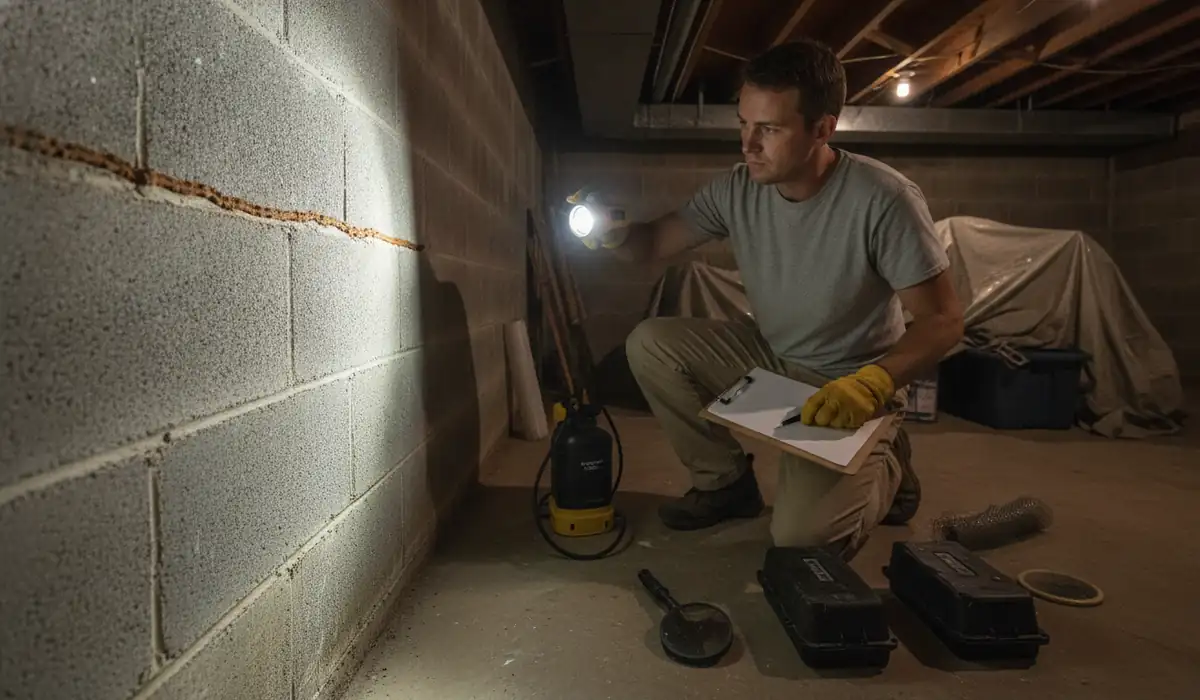
Close-up of subterranean termite mud tubes running up a concrete foundation wall

What you can do right now

  1. Save a few swarmers in a sealed bag or photograph them.
  2. Photograph any mud tubes; don't break them open.
  3. Don't spray the area; it can make an inspection harder.
  4. Pull mulch and soil back from the foundation.
  5. Call for an inspection and ask what treatment options they offer.

Questions to ask before you hire

  • Is your business licensed by the Illinois Department of Public Health, and what is the license number? Who is the certified technician?
  • What did the inspection find, and can I have it in writing?
  • Are you proposing a liquid treatment or bait system, and why?
  • What warranty comes with the treatment, and what does renewal cost?
  • Does the warranty cover damage repair or only re-treatment?

Related pest control guides

Straight answers

What you can do vs. when to call a professional

Prevention is mostly housekeeping and sealing gaps. Persistent, spreading, or structural problems are where a licensed professional earns the call.

What you are seeingWhat you can do nowWhen to call a professional
A few ants in the kitchenClean up food and crumbs, store food sealed, wipe the trail, fix leaksThey keep coming back, or you see large black ants near wood (possible carpenter ants)
Mouse droppings or gnawingStore food in sealed containers; look for gaps around pipes, doors, and ventsDroppings in several rooms, nests, noise in walls, or it continues after sealing
Winged insects swarming indoors in springSave a few in a sealed bag or photograph themAlways: swarmers indoors can mean termites. Get an inspection
Mud tubes on the foundationLeave them alone and photograph themAlways: these are a sign of subterranean termites
Bites, blood spots, or dark specks on beddingWash and dry bedding hot; do not move furniture to other roomsAlways: IDPH says an experienced professional is usually better than doing it yourself
Cockroaches seen in daylightRemove food and water sources; reduce clutterThey keep appearing, or you see them in daytime, which can mean a larger population

General guidance, not a diagnosis. Prevention approach follows theEPA Citizen's Guide to Pest Control and Pesticide Safety. If you use any pesticide yourself, follow the label exactly.

What to expect

What termite inspection and treatment usually involve

Every home and every pest problem is different. These are the stages most professional pest control follows.

  1. Inspection

    A pest control professional looks for the pest, the evidence (droppings, damage, trails, live insects), how it is getting in, and what is attracting it: food, water, clutter, or gaps in the building.

  2. A treatment plan and a price

    Ask for the plan, the products or methods involved, any preparation you need to do, and the price before work begins. Illinois requires the business to be licensed by the Illinois Department of Public Health (IDPH) and to employ a certified technician.

  3. Treatment and exclusion

    Depending on the pest, this can mean baits, traps, targeted applications, or sealing entry points (exclusion). The EPA recommends integrated pest management (IPM), which combines methods and puts prevention first.

  4. Follow-up and monitoring

    Many problems need more than one visit. Ask what follow-up is included, how results are checked, and what to do between visits.

  5. Prevention

    The provider should explain what will keep the problem from coming back: sealing gaps, fixing moisture, storing food, and reducing clutter. No treatment can guarantee pests never return.

How the referral works

How our contractor-matching service works

  1. You call the number on this site

    Have the address or ZIP code ready, plus what you are seeing: the pest, where, how long, and anything you have already tried.

  2. Your call is routed to a participating provider

    Your call is connected with a participating independent pest control professional who serves your area, if one is available. We do not send anyone ourselves.

  3. You deal with that provider directly

    The provider inspects, recommends a plan, quotes the price, and does any work you agree to under their own business name, IDPH license, and insurance. You decide whether to hire them; there is no obligation.

Good to know: availability and eligible services depend on which participating providers cover your ZIP code. Whoever you hire, ask for their IDPH business license number and check it with the IDPH Pest Control Business Search. Our hiring questions cover the rest.

Get a Termite Inspection

Call and we will try to connect you with a participating independent pest control provider who serves your area.

Questions

Termite Control questions

Are termites common in Illinois?

Yes. University of Illinois Extension identifies the eastern subterranean termite as the common destructive termite in Illinois. It lives underground and reaches homes through soil, foundation cracks, and wood that touches the ground.

When do termites swarm in Illinois?

Swarms are most common in spring, but University of Illinois Extension notes they can happen during most warm months of the year in Illinois.

How much does termite treatment cost in Illinois?

HomeAdvisor's June 2026 national data puts termite treatment at $263 to $1,033, averaging $621, and lists $225 to $900 for subterranean termites. Size of the home, construction, and the treatment type drive the price.

Do termite swarmers mean my house is infested?

Swarmers indoors, especially from a basement or wall, often mean a colony is nearby or in the structure. Swarmers outdoors are less conclusive. Either way, an inspection is the way to know.

Call (217) 626-5123 · Pest Control Help