
Learn
Look for winged swarmers indoors (often in spring), discarded wings on window sills, pencil-width mud tubes on foundation walls, and wood that sounds hollow or crumbles. In Illinois, the culprit is usually the eastern subterranean termite, which lives in soil and travels through mud tubes, according to University of Illinois Extension.
Published 2026-10-12 · Updated 2026-10-12
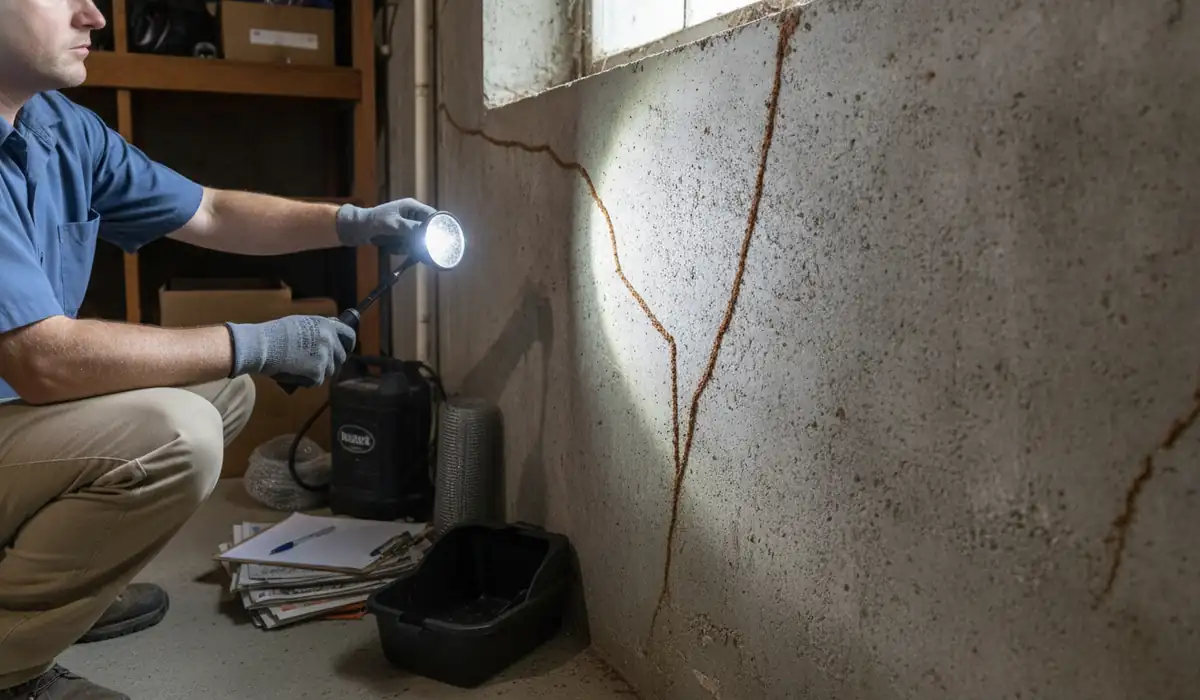
Termites are easy to miss until they swarm. The good news: there are clear signs, and an inspection can tell you what’s going on before damage gets expensive.
Yes, Illinois has termites
According to University of Illinois Extension, the common destructive termite in Illinois is the eastern subterranean termite (Reticulitermes flavipes). It builds its colony underground, needs high humidity, and avoids open air, so it travels through soil and through mud tubes it builds over hard surfaces like concrete.
The signs
- Swarmers. Winged termites emerge to start new colonies. Extension notes swarms are common in spring but can occur in most warm months in Illinois. Swarmers indoors, especially from a basement wall or near windows, are the clearest sign.
- Discarded wings. Small, equal-length wings on window sills and floors after a swarm.
- Mud tubes. Pencil-width tunnels of soil running up foundation walls, piers, or slab edges. Extension recommends scouting the exposed foundation for them.
- Damaged wood. Wood that sounds hollow, blisters, or breaks easily, with soil packed into the galleries.
- Moisture problems. Termites need moisture, so damp crawl spaces and leaking gutters raise the risk.
Termites or flying ants?
Both swarm in spring. A quick way to tell them apart:
| Termite swarmer | Ant swarmer | |
|---|---|---|
| Antennae | Straight | Elbowed (bent) |
| Waist | Thick, no pinch | Narrow, pinched |
| Wings | Two pairs, equal length | Front pair longer than back |
If you’re not sure, save a few in a sealed bag for the inspector. Large black ants indoors could also be carpenter ants, which are drawn to moist wood; see ant control.
Prevention from University of Illinois Extension
- Seal and caulk foundation cracks, a common entry point.
- Keep a 12- to 18-inch bare soil strip around the foundation; pull mulch and plants back.
- Leave part of the concrete foundation exposed so mud tubes are visible, and check it.
- Manage water: gutters, downspouts, and grading should carry water away from the house.
- Don’t stack firewood or lumber against the house.
What to do if you see signs
- Don’t spray swarmers or break open mud tubes; it can make an inspection harder.
- Save a few swarmers and photograph tubes or damage.
- Get a professional inspection. Many providers include it with a treatment quote.
Professional termite control for subterranean termites usually means a liquid soil treatment or a baiting system. HomeAdvisor’s June 2026 data puts termite treatment at $263 to $1,033, averaging $621. Before you hire, check the provider’s Illinois license; see our questions to ask a pest control company.
The bottom line
If you want a professional to take a look, call (217) 626-5123 and we'll try to connect you with a participating independent pest control provider who serves your area. That provider inspects and quotes the job themselves. If you use any pest product in the meantime, follow its label exactly.